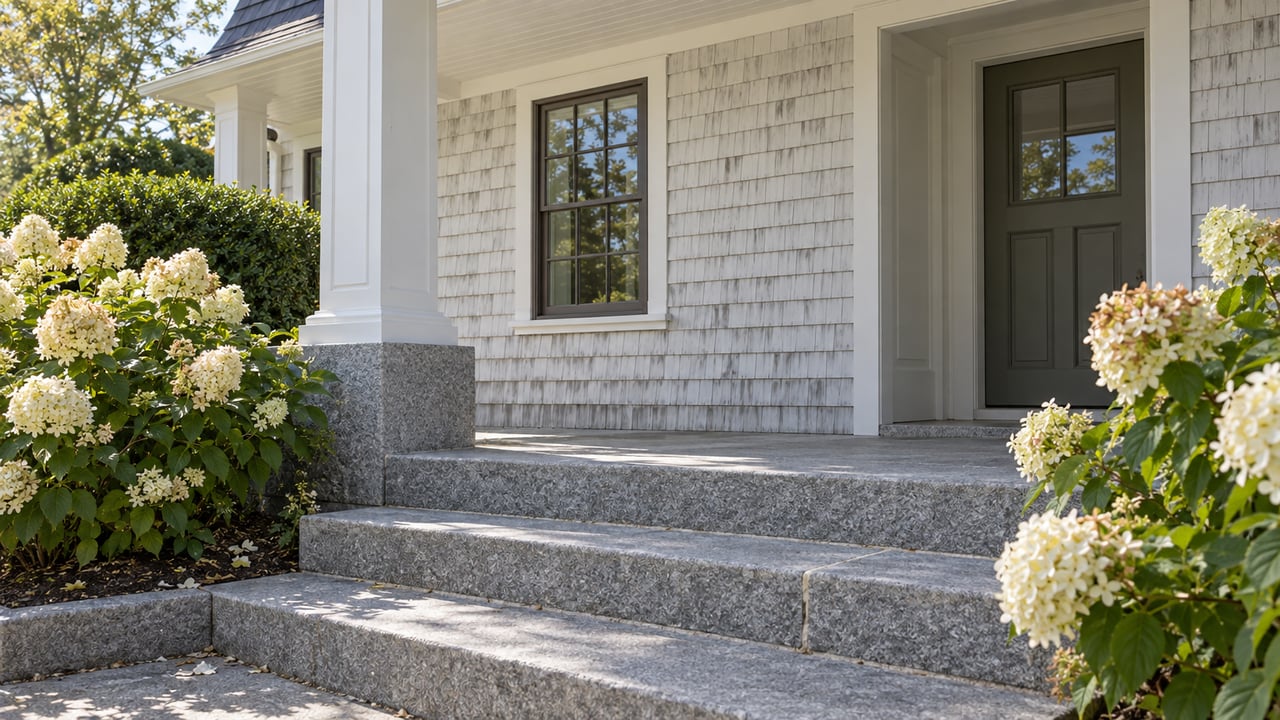
Cape Elizabeth Home Prices: How Zillow Estimates Compare with Recent Sales
October 1, 2026
October 1, 2026
As of late September 2026, Zillow's automated estimate for a typical home in Cape Elizabeth sits at $837,792, up 0.7 percent over the past year. That number reads as calm, almost flat, for a town where waterfront listings routinely clear seven figures. It is also, according to the state's own reporting on actual closings, below Cape Elizabeth's recent median sale price.
Preliminary Maine Association of Realtors and Maine Listings data for August 2026, reported by the Sun Journal on September 10, placed Cape Elizabeth among a short list of Cumberland and York county towns where the median sale price had climbed above $900,000. Kennebunkport and Ogunquit had crossed $1 million. Kennebunk, Kittery, Chebeague Island, Freeport, Cumberland and Cape Elizabeth all closed above $900,000. Zillow's estimate and the county's actual closing data are describing two different things, and the gap between them is worth understanding before you write an offer or set a list price this fall.
Zillow's figure is built to cover every home in Cape Elizabeth whether or not it's for sale. It updates continuously from tax records, past sales, and nearby comparables, which makes it useful for a rough long-term read on the town; in a market that's genuinely thin at the top, its estimate can differ from recent closing prices. Cape Elizabeth doesn't turn over many homes in a given month. When even a handful of properties in the $1.5 million to $2 million range close in the same stretch, they can raise the sale median while a townwide estimate continues to reflect the whole housing stock.
The Maine Association of Realtors number works differently. It counts only what actually closed, in a defined window, through the Maine Listings MLS. That's a smaller, noisier sample than an automated index, which is why a single month is best treated as a snapshot rather than a lasting trend.
The seasonal swing inside Cape Elizabeth's own listing data makes a related point. In January 2026, homes listed for sale in town carried a median price of $825,000 and sat for a median of 93 days before going under contract, according to tracked listing data. By July 2026, the same kind of tracked figures showed a median list price of $1.13 million and a much faster median of 46 days on market.
That's not six months of appreciation. Winter listings in a coastal town like Cape Elizabeth tend to skew toward smaller, more modest properties whose owners need to move regardless of season. Spring and summer bring out the waterfront estates and the larger coastal lots that owners have been sitting on until the light and the landscaping cooperate. The median moves because the mix of homes coming to market changes, not because the same house was worth 37 percent more in July than it was in January.
Anyone watching a town-level median from month to month and reading it as a straight price trend is usually reading inventory composition instead.
The broader county context adds another layer. Cumberland County's median sale price for the rolling quarter from June through August 2026 was $621,500, up less than one percent from the same period a year earlier, even as the number of homes sold rose about 3 percent. Statewide, August closings fell nearly 10 percent from a year earlier while the median price still ticked up to $424,550.
Days on market across the county roughly doubled between July and August, and new listings pulled back sharply for the month, according to the same Maine Association of Realtors data. Homes were still selling at or slightly above asking price through that stretch, which tells a different story than a market in retreat. It's a market where the sharpest edge of the shortage dulled slightly without disappearing. Cape Elizabeth, sitting at the upper end of that county, starts from a tighter position than almost anywhere else in the state, so a slower month here still resembles a strong month nearly everywhere else in Maine.
For a buyer, that slight lengthening in days on market is real room, even if it's modest. A seller no longer has to price for a bidding war that closes in a week, but a buyer shouldn't mistake a two-week difference for a market that's turned in their favor.
A single median for Cape Elizabeth also erases real differences in what that money buys depending on where in town you're looking. The Shore Road corridor, running along the water from the South Portland line down through town toward Two Lights, carries the heaviest concentration of premium coastal addresses and the properties that most often pull the median upward when they close. Broad Cove and the Two Lights neighborhood sit at the oceanfront end of that range. Crescent Beach, with its sandy shoreline and state park frontage, occupies a different point on the map entirely, even though it's a short distance from both Fort Williams Park and Portland Head Light.
None of that distinction shows up in a single town-wide figure. A listing near the inland school district and a waterfront property on Shore Road are not competing in the same market, even though both register in the same monthly median.
A few practical takeaways follow from all of this:
Does this mean Cape Elizabeth is more expensive than it looks? It means the number most people check first is measuring something different from what actually closes. The town has always had a wide range, from modest inland homes to waterfront estates well into seven figures, and the median blends all of it together.
Should I ignore the Zillow or Redfin number entirely? Not entirely. It's a reasonable gut check on long-term value. It provides a townwide estimate rather than a comparable-sales analysis for a specific street, especially in a market this thin at the top.
Is the market actually slowing down? County-wide, modestly, in the sense that homes sat a bit longer and new listings pulled back in August. Prices haven't followed that same pattern downward. Slower and cheaper are not the same thing here.
If you're weighing an offer against an online estimate, or trying to figure out what a specific stretch of Shore Road or Crescent Beach is actually worth this fall, the town-wide median won't answer it. Dambrie Garon Real Estate Advisors can pull the closed comparables for your exact corridor and walk you through what they mean. Let's talk about your next move.

Cumberland Maine
What James Baldwin, a dinner at Dara and a possible VA have me thinking about this week.

Fill out the form below to learn more about buying or selling a house in your area.
Dambrie Garon Real Estate Advisors offers their clients particular expertise in the buying and selling of single and multi-family properties, new construction, and subdivision projects. Our clients benefit from our insights into home renovations, knowing where and how much to invest to bring a property to its highest and best use, whether for renovation and resale or renovation for the families' own use.