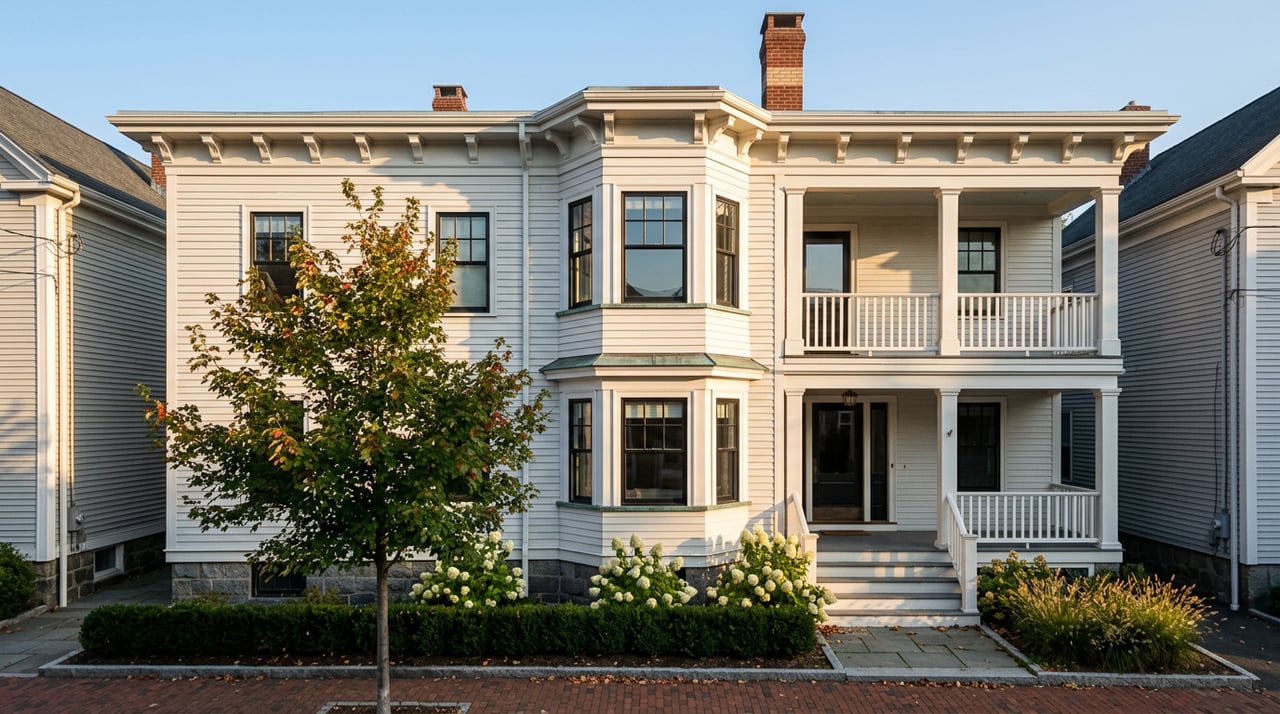
The Real Gatekeeper on a Portland Triple-Decker Isn't the Inspector
September 17, 2026
September 17, 2026
Buyers touring a peninsula triple-decker or a converted West End Victorian usually treat the home inspection as the last real test before closing. Pass it, and the deal is basically done. That assumption holds for a lot of Portland's newer stock, but it breaks down fast on pre-1950s multi-family properties, and the break happens somewhere the buyer isn't watching.
The inspection report can come back clean, or clean enough to negotiate around, and the deal can still stall two weeks later when an insurance underwriter declines to write a policy. Home inspectors and insurance underwriters are not applying the same standard to the same building. One is documenting condition. The other is pricing risk against a set of rules that have nothing to do with whether the seller disclosed anything or whether the inspector flagged it as urgent. For older Portland multi-family properties, that second approval is often the one that actually determines whether the sale closes on schedule.
Knob-and-tube wiring is the clearest example. It was the standard method for running household electricity from roughly the 1880s through the 1940s, which puts it squarely inside the era of Portland's peninsula triple-deckers and West End conversions. An inspector will note it, describe its extent, and separate the safety items from the negotiation items. That's a normal part of an inspection on century-old city stock.
What often surprises buyers is what happens next with the insurance side. Standard homeowners insurers frequently won't write a policy on a property with active knob-and-tube wiring at all. Many carriers that will still work with a buyer ask for the wiring to be replaced within 30 to 60 days of the policy taking effect, and when coverage comes through the excess and surplus lines market instead, it typically carries premiums two to three times standard rates and sometimes a longer replacement window of six to twelve months. No insurance binder, no mortgage. That's the sequence that catches people off guard: the property passes inspection, the buyer and seller negotiate a credit or a repair, and then the buyer's own insurance search turns up a wall they didn't know was there.
The practical move is to have the wiring's condition documented by a licensed electrician early, not after the mortgage commitment is already in motion. A written report on the extent of active knob-and-tube, plus a plan for addressing it, gives a buyer something concrete to bring to an insurance agent before the underwriting clock becomes the thing holding up closing.
Radon testing gets treated as a rural concern in a lot of buyer conversations, the kind of thing you worry about on a lot in Cumberland Center but not on Congress Street. That's a mistake in Portland specifically, because radon comes from the granite bedrock underneath the ground, not from anything about density or proximity to downtown. Roughly one in three Maine homes tests above the EPA's action level, and a peninsula building sitting on the same bedrock as a home in the western suburbs carries the same exposure.
This matters for the same reason knob-and-tube does. It's not just a health question, it's a financial one that shows up on Maine's own disclosure form, which explicitly asks sellers about any known radon testing in air and water. A buyer who skips the test because the property is in a dense city neighborhood is making a decision based on geography that the bedrock doesn't actually respect.
Portland's peninsula and its older streetcar-era neighborhoods still run, in many cases, on original clay sewer laterals connecting the house to the municipal line. A general home inspection covers what's visible inside the structure. It typically does not include a sewer scope, which is the only way to actually see the condition of that lateral line before you own it.
For a triple-decker with three units' worth of waste running through a line installed decades before anyone was thinking about pipe materials the way we do now, that's a meaningful gap to leave unaddressed. A cracked or root-intruded clay lateral is a five-figure repair in the wrong circumstances, and it's the kind of cost that a standard inspection contingency won't necessarily catch because it isn't designed to look there. Asking for a sewer scope as a separate line item, especially on peninsula and streetcar-neighborhood properties, is a small ask relative to what it protects against.
A meaningful share of the West End's Victorian-era stock has been converted from single ownership into condominiums over the years, and the city has a specific process for that conversion. Portland's condominium conversion ordinance requires the owner to give existing tenants formal notice of the intent to convert, along with a specific offer and terms, and it builds in an option period for a tenant to purchase their own unit before it goes to the open market. That process shapes how these buildings enter the resale market and why their ownership structure can look different from a straightforward duplex or triple-decker.
Once a building is split into units, the inspection and insurance questions get more complicated, not less. A converted building carries shared systems, a shared roof, and often a shared heating plant, and the condo association's boundaries determine what the unit buyer is actually responsible for versus what belongs to the group. A buyer evaluating one unit needs to know what the unit itself owns and what the association controls, because both get priced into the deal even though only one shows up on the unit's own disclosure form.
Maine's seller disclosure law, codified at Title 33, Section 173, applies to residential properties with one to four dwelling units and requires sellers to disclose known defects, meaning conditions the seller actually knows about, not conditions a hypothetical thorough investigation would have turned up. Sellers are not required to hire inspectors or go looking for hidden problems. Their obligation stops at what they reasonably know from living there.
That distinction matters more on older multi-family properties than it does on most single-family resale. A seller who inherited a triple-decker, or who has owned it as a rental for decades without living in a unit themselves, may genuinely not know whether the second-floor wiring is still active knob-and-tube or whether the sewer lateral is clay or has already been relined. The disclosure form isn't hiding anything in that scenario. It's simply limited to what the seller actually knows, which is why the inspection and any additional scopes a buyer orders are doing work the disclosure form was never designed to do.
One item the law does require regardless of what the seller personally knows is notice of an underground oil storage tank, active or removed, under Title 38, Section 563. Older Portland multi-family properties heated by oil for decades are exactly the kind of building where this shows up, and it's worth confirming early rather than discovering it during a title search.
None of this is only a caution story. In the second quarter of 2026, Portland's multifamily investment market showed average per-unit sale prices down close to 13 percent from a year earlier, alongside cap rates that moved higher over the same period. That combination usually means sellers have more room to negotiate than they did a couple of years ago, and it's exactly the kind of environment where a buyer who has already priced in a rewire, a sewer scope, and a realistic condo-association split has leverage the next buyer in line doesn't.
The buyers who lose that leverage are the ones who find out about the insurance clause, the clay lateral, or the shared roof after they're already emotionally and financially committed. Ordering the electrician's report, the sewer scope, and a clear read on the association's boundaries before the inspection contingency deadline turns each of these from a surprise into a negotiating point.
Does every home with knob-and-tube wiring get declined for insurance? Not automatically. Underwriting varies by carrier, and some will write a policy contingent on replacement within a set window after closing, or through a surplus lines carrier at a higher premium. The safest step is confirming with an insurance agent directly rather than assuming either outcome.
If the seller's disclosure form says nothing about the wiring or the sewer line, does that mean there's no issue? It means the seller isn't aware of one, which on an older multi-family property is common even when a real issue exists. The disclosure form reflects the seller's knowledge, not an independent verification of the building's systems.
Is a sewer scope something the standard home inspection includes? Generally not. It's typically ordered as a separate service, and it's worth requesting specifically on peninsula and older streetcar-neighborhood properties where clay laterals are still common.
If you're evaluating an older Portland multi-family property, whether as a first purchase or the next addition to a portfolio, Dambrie Garon Real Estate Advisors can walk through what a specific building's age, systems, and ownership structure mean for your offer before you're locked into a timeline. Let's talk about your next move.



Cumberland Maine
What James Baldwin, a dinner at Dara and a possible VA have me thinking about this week.



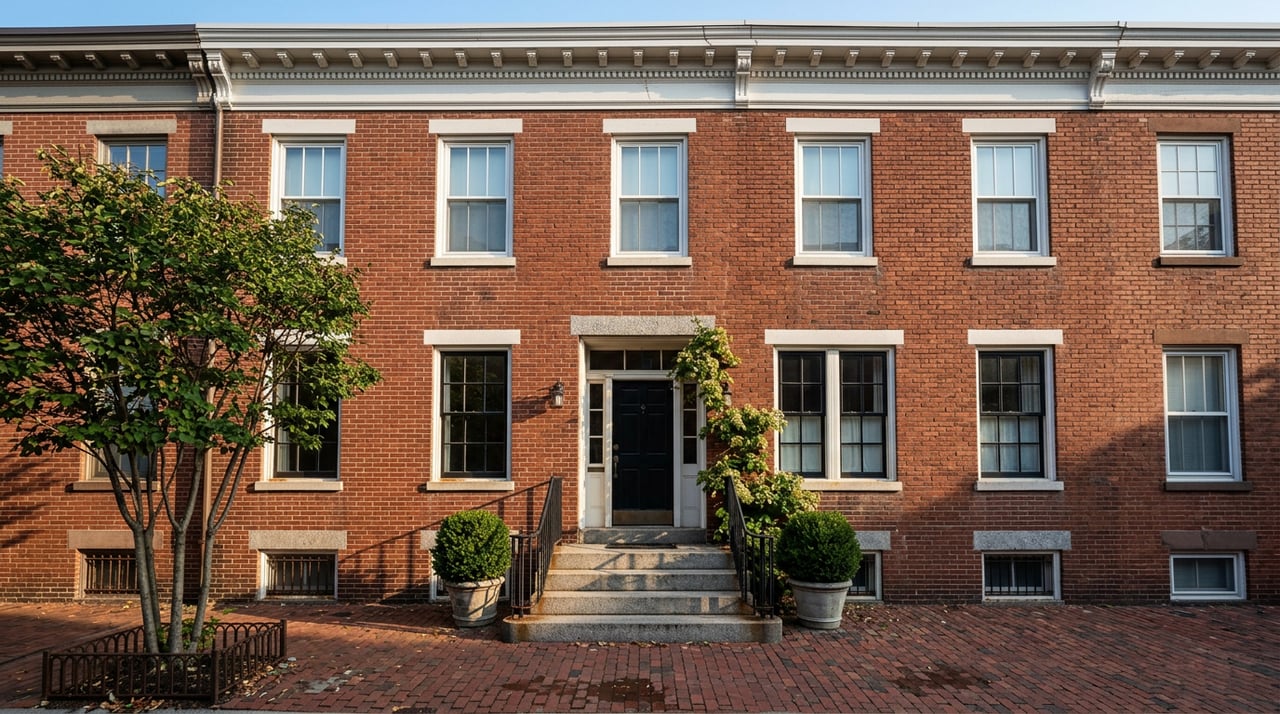

Fill out the form below to learn more about buying or selling a house in your area.
Dambrie Garon Real Estate Advisors offers their clients particular expertise in the buying and selling of single and multi-family properties, new construction, and subdivision projects. Our clients benefit from our insights into home renovations, knowing where and how much to invest to bring a property to its highest and best use, whether for renovation and resale or renovation for the families' own use.