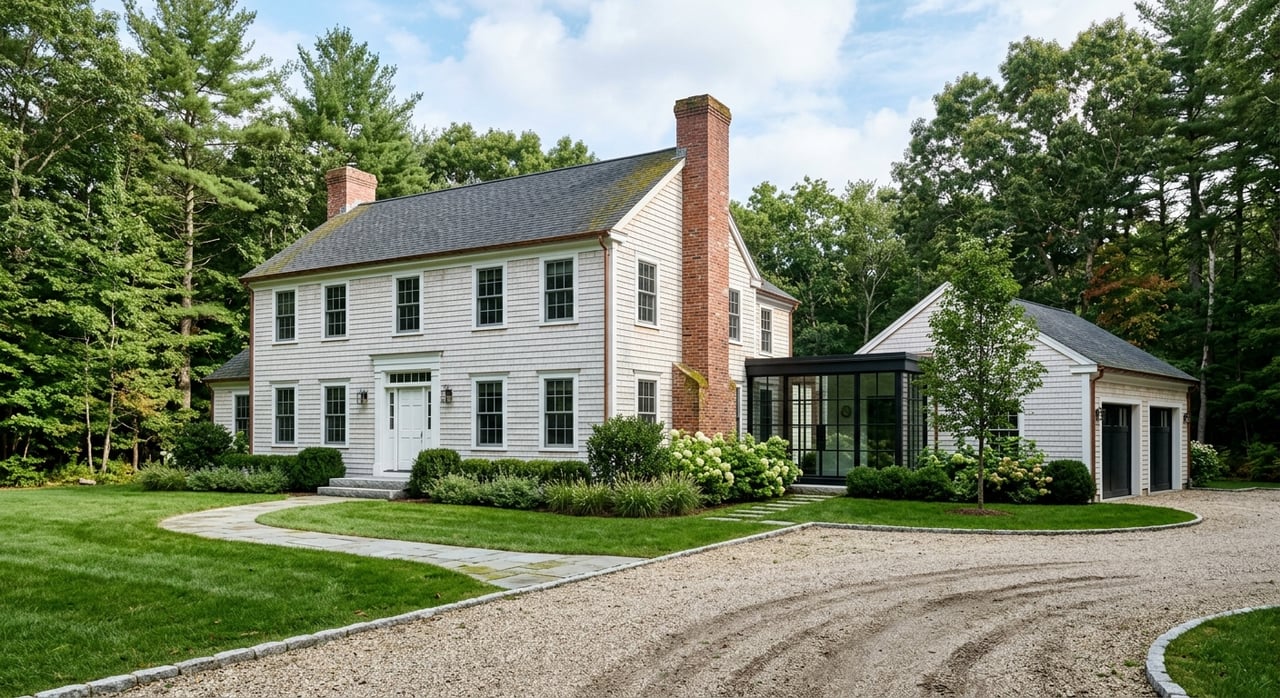
Cumberland Center vs Falmouth: Which Community Fits?
July 23, 2026
July 23, 2026
If you are deciding between Cumberland Center and Falmouth, you are probably weighing more than a price tag. You may be asking how the homes feel, how much land you can expect, and whether the daily drive will actually be different. This comparison will help you sort through those tradeoffs with a clear, local lens so you can see which area better matches your budget, lifestyle, and priorities. Let’s dive in.
Cumberland Center and Falmouth sit in the same broader Portland-area orbit, but they offer different buying experiences. Cumberland Center is the civic core of Cumberland, while Falmouth is a larger town just north of Portland.
The scale alone creates a different feel. Census Reporter data shows Cumberland Center has 2,790 residents across 4.2 square miles, while Falmouth has 12,755 residents across 29.4 square miles. In simple terms, Cumberland Center reads more compact, while Falmouth gives you a broader town footprint.
Recent pricing also separates the two. Redfin market pages for the three months ending in May 2026 show a median sale price of $661,000 in Cumberland Center compared with $982,000 in Falmouth. That gap matters if you want to stay close to Portland-area job centers without stretching into a higher price bracket.
For many buyers, price is the first big filter. Based on the recent median sale prices, Cumberland Center comes in well below Falmouth, even though both are established communities in a strong regional market.
The owner-occupied value data points in the same direction. Census Reporter lists a median owner-occupied value of $539,500 in Cumberland Center and $767,500 in Falmouth. That does not tell you what every home will cost, but it does reinforce the broader pattern that Falmouth generally commands a higher price point.
That higher pricing can reflect several factors, including the town’s larger housing base and broader range of residential settings. Cumberland Center, on the other hand, may appeal to buyers who want a more village-centered setting and a lower recent entry point.
Cumberland has long been a strongly single-family market. The town’s comprehensive plan materials say 96% of housing was single-family in the 2000 census, with 91% owner-occupied, and multifamily units making up only 2.1% of the housing stock.
A 2025 Cumberland comprehensive plan summary shows that pattern still holds in many ways. The town continues to have a high share of single-family homes with three or more bedrooms, about 89% owner-occupied housing, and essentially no reported homeowner or rental vacancy. For buyers, that can mean a market with a stable, owner-focused housing base and limited supply.
Falmouth offers a more mixed housing stock. According to the Falmouth EDIC, about 82% of residential properties are single-family and about 14% are multifamily, while roughly 81% of year-round occupied units are owner-occupied.
Falmouth also has a notable share of seasonal, recreational, or occasional-use housing, at just under one-third of housing units. The EDIC adds that most of the town’s homes were built between 1950 and 1999, with about 14% built in the 2000s. That mix may give buyers more variety across neighborhoods and property types, though often at a higher cost.
One of the clearest differences between Cumberland Center and Falmouth is how land is organized.
Cumberland’s zoning shows a split between village-scale and rural-scale development. In and around Cumberland Center, VMDR allows 20,000-square-foot lots, VMUZ allows 5,000-square-foot lots, and the town center district allows 20,000 square feet or 10,000 square feet with sewer.
That helps explain why Cumberland Center can feel more compact than other parts of Cumberland. Outside the village-oriented areas, the town shifts toward much larger land requirements, including districts such as RR1 with 4 acres or 2 acres with sewer, and RR2 with 2 acres.
Falmouth’s residential framework generally leans toward larger lots. The town’s comprehensive plan materials say designated residential growth areas typically start at 20,000-square-foot minimums, and earlier zoning materials list single-family minimums of 20,000 square feet in RA, 40,000 in RB, 60,000 in RC, and 80,000 square feet in Farm & Forest.
For buyers, the practical takeaway is simple. Cumberland Center is where you are more likely to see a compact village lot pattern, while Falmouth’s base residential pattern is typically more spread out and based on larger parcels.
If your work or routine takes you into Portland or nearby towns, commute time may be less of a deciding factor than you expect.
Census Reporter shows a mean commute time of 23.6 minutes in Cumberland Center and 22.6 minutes in Falmouth. That is a very small difference, especially compared with the larger gap in home prices.
Cumberland’s 2025 survey results also suggest many residents commute along the Portland-area corridor or to nearby suburbs. The most common commute ZIP codes included Downtown Portland, Cumberland, Portland’s 04102 area, Yarmouth, and Falmouth.
Falmouth’s 2024 comprehensive plan update adds another layer. The town has more inbound than outbound commuters, with about 5,400 employees commuting into Falmouth and about 4,500 residents commuting out. The plan identifies Route 1 and Route 100 as major commercial corridors, which helps explain Falmouth’s role as both a residential and employment center.
Choosing between Cumberland Center and Falmouth often comes down to what matters most in your day-to-day life.
If you want a more village-centered setting, Cumberland Center may stand out. It offers a smaller geographic footprint, a compact land pattern in the center, and a lower recent median sale price than Falmouth.
If you want a larger town with a broader housing mix, Falmouth may be the better fit. Its housing stock includes more multifamily property, its town footprint is much larger, and it functions as a meaningful local job center as well as a residential market.
Neither option is universally better. The better choice is the one that aligns with your budget, the kind of lot and home style you want, and how you picture your daily routine.
Here is a quick side-by-side look at the biggest differences.
| Factor | Cumberland Center | Falmouth |
|---|---|---|
| Recent median sale price | $661,000 | $982,000 |
| Median owner-occupied value | $539,500 | $767,500 |
| Population | 2,790 | 12,755 |
| Land area | 4.2 sq. mi. | 29.4 sq. mi. |
| Mean commute time | 23.6 minutes | 22.6 minutes |
| Housing pattern | Strongly single-family | More mixed housing stock |
| Lot pattern | Compact village lots visible in center | Generally larger residential lots |
When you tour homes in these two markets, try to compare more than the house itself. Pay attention to the lot pattern, how close together homes sit, and whether the immediate area feels more village-like or more spread out.
It also helps to define your non-negotiables early. If budget flexibility is limited, Cumberland Center may keep more options within reach. If lot size variety or a broader housing mix matters more, Falmouth may justify the higher price point.
A focused search can save time and reduce decision fatigue. When you know what tradeoffs you are willing to make, the right fit often becomes much easier to spot.
If you are weighing Cumberland Center against Falmouth, working with a local team can help you compare not just listings, but the real differences in setting, land patterns, and market position. Dambrie Garon Real Estate Advisors can help you evaluate your options and make a more confident move.
Fill out the form below to learn more about buying or selling a house in your area.
Dambrie Garon Real Estate Advisors offers their clients particular expertise in the buying and selling of single and multi-family properties, new construction, and subdivision projects. Our clients benefit from our insights into home renovations, knowing where and how much to invest to bring a property to its highest and best use, whether for renovation and resale or renovation for the families' own use.