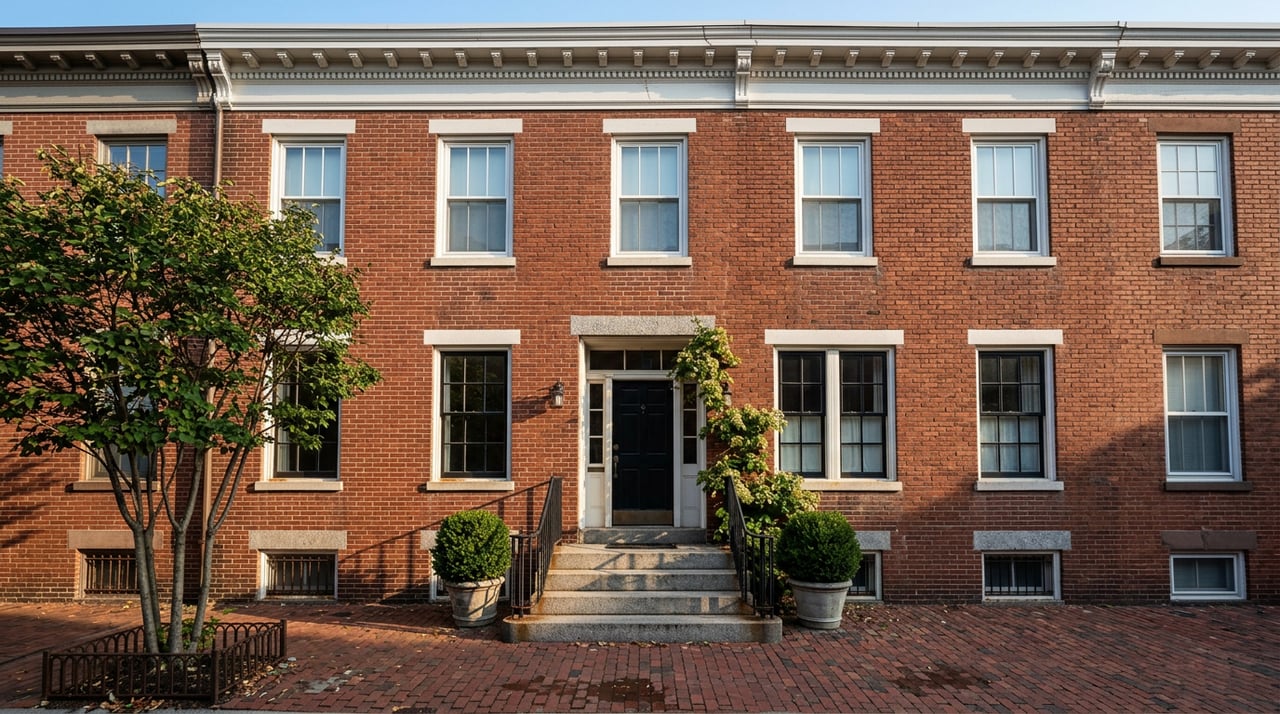
Comparing Portland Maine Neighborhood Home Prices
August 27, 2026
August 27, 2026
Ask what a house costs in Portland, Maine, and the honest answer is "which Portland." In August 2026, Movoto's market tracking put the citywide median list price at $625,000, with price per square foot down roughly 5 percent from a year earlier. That single number gets repeated in market updates and dinner-table conversations all year, and if you take it at face value, you will misjudge nearly every neighborhood in the city by tens or sometimes hundreds of thousands of dollars.
The more useful story is that Portland's peninsula and near-peninsula neighborhoods now sit at wildly different price points, from the low $400,000s in Libbytown to well past a million dollars in Munjoy Hill and the East End. The interesting part isn't that the gap exists. It's that the neighborhood with the least expensive homes right now is also the one sitting next to some of the biggest capital investment happening anywhere in the city, and the prices haven't caught up to it yet.
Pull the median price for any individual Portland neighborhood and the city-wide figure starts to look almost meaningless as a planning tool. Zillow's neighborhood-level tracking shows Libbytown near $477,600, with Homes.com putting the trailing 12-month average sale price closer to $442,600. Downtown sits around $624,100. East Bayside and India Street run closer to $695,700, and Stroudwater, on the western edge near the Fore River, sits around $717,200. Trulia's February 2026 data put the East End's average home price near $1,595,000, the highest figure of any Portland neighborhood tracked.
| Neighborhood | Approximate price point | Data window |
|---|---|---|
| Libbytown | $435,000–$478,000 | 2026 |
| West End | ~$517,000 (varies by source and property condition) | 2026 |
| Downtown | ~$624,000 | 2026 |
| East Bayside / India Street | ~$696,000 | 2026 |
| Stroudwater | ~$717,000 | 2026 |
| East End / Munjoy Hill | ~$1,595,000 average | February 2026 |
These figures come from different data providers pulling from different windows, so treat them as directional rather than exact. What they show clearly is a spread of nearly four times between the least and most expensive submarkets inside one small city, all within a few miles of one another and all technically described by the same citywide median.
Fifteen years ago, Thompson's Point was a stretch of former rail yard on the edge of Libbytown. Today it holds Bissell Brothers' signature brewery location, the Children's Museum & Theatre of Maine, the Brick South event space, an outdoor concert stage, and a winter ice rink. That transformation is not new news. What's new is what's happening there right now.
In March 2026, Callahan Construction Managers announced it would manage construction of a new 257-unit residential building at Thompson's Point for developer Cathartes, a six-story, 457,600-square-foot project with a 460-spot parking garage designed partly to buffer residents from the adjacent rail line. At the same time, a dual-branded Residence Inn and Moxy hotel from Colwen Hotels, general contractor Procon Inc., was nearing completion just steps from Brick South and within walking distance of the Portland Transportation Center and the Amtrak Downeaster line. By July 2026 the building was essentially finished, with the Moxy portion's grand opening set for August.
That is a genuine wave of capital landing in one small district: new housing, a new hotel, better rail access, all arriving inside a single year. And yet Libbytown's home prices are still sitting in the $435,000 to $478,000 range, a fraction of what East End buyers pay for a neighborhood that underwent a similar shift from industrial and working-class to premium and walkable, just on a longer timeline.
This is the part worth sitting with if you're comparing neighborhoods rather than skimming median prices. Home values don't reprice the moment new development breaks ground. They tend to lag the physical changes on the ground, sometimes by years, because buyers need to see the transformation finish and stabilize before they're willing to pay a premium for it. East End's prices reflect decades of that process already playing out. Libbytown's current prices reflect a neighborhood in the middle of it.
There's also a demand-side piece to this. Redfin's migration data for the first quarter of 2026 showed Boston buyers as the top source of out-of-metro home searches into Portland, ahead of Washington and New York, while roughly two-thirds of local Portland searchers were looking to stay within the metro area rather than leave it. Buyers moving in from higher-cost metros tend to concentrate their budgets on the most established, most walkable, most water-adjacent neighborhoods first. That pattern helps explain why East End and Munjoy Hill absorb premium pricing quickly while a neighborhood like Libbytown, undergoing real change but still building its reputation, takes longer to see the same effect.
None of this is a promise that Libbytown will trace East End's price trajectory. Neighborhood repricing depends on dozens of variables that don't move on a predictable schedule. What it does mean is that the gap between "where the capital is going" and "where the prices already reflect it" is unusually visible in Portland right now, and Libbytown is the clearest example of it.
There's a second friction point worth understanding before you commit to a neighborhood based on price alone. The West End is one of Portland's designated historic districts, which means exterior changes to a home there, from replacing siding to altering a roofline, go through the city's Historic Preservation Board and require a Certificate of Appropriateness before a permit is issued. The city's preservation staff, including a dedicated Historic Preservation Manager and Preservation Compliance Coordinator, offer on-site consultations for owners trying to figure out what a given project will require before they apply.
None of this shows up on a listing sheet. It shows up after you're under contract and pulling permits for the addition or window replacement you'd planned. A renovation that would take a few weeks of contractor scheduling in Libbytown or Stroudwater can take considerably longer in the West End once historic review, and often a preservation-experienced contractor, enters the process. That's not a reason to avoid the West End. Its character premium is largely built on the fact that these controls exist. It is a reason to budget time, not just money, if a fixer in a historic district is part of your plan.
If you're comparing Portland neighborhoods with a set budget, the citywide median is close to useless as a guide. The more useful exercise is figuring out where you land in the spread above and what that specific price point buys you, then layering in what's happening around that neighborhood right now rather than what already happened years ago. Libbytown is the clearest current case of a neighborhood where the physical investment has arrived ahead of the price tag. The West End is the clearest case of a neighborhood where the price reflects not just the homes but the regulatory environment that protects their character. Both are real mechanics behind the numbers, not just color commentary.
Does new development near a neighborhood guarantee its home prices will rise? No. It signals that capital is flowing in and that buyer interest may follow, but repricing depends on how the development performs once it's finished, how the surrounding area responds, and broader market conditions that no single project controls.
Does every home in the West End require historic review before renovation? Only exterior changes affecting the character of the building or site typically trigger Historic Preservation Board review. Interior renovations generally do not require the same process, but any exterior work, from windows to additions, should be checked against the district's requirements before you assume a timeline.
Is the East End to Libbytown price gap likely to close? There's no way to know on a set timeline. What's clear from the current data is that the gap exists right now, at a moment when Libbytown has more new construction and transit investment landing than most Portland neighborhoods, which is exactly the kind of divergence worth watching rather than ignoring.
If you're trying to figure out which Portland neighborhood actually fits your budget and your plans, the team at Dambrie Garon Real Estate Advisors spends its time in these exact comparisons, not just the citywide average. Let's talk about your next move.

Fill out the form below to learn more about buying or selling a house in your area.
Dambrie Garon Real Estate Advisors offers their clients particular expertise in the buying and selling of single and multi-family properties, new construction, and subdivision projects. Our clients benefit from our insights into home renovations, knowing where and how much to invest to bring a property to its highest and best use, whether for renovation and resale or renovation for the families' own use.