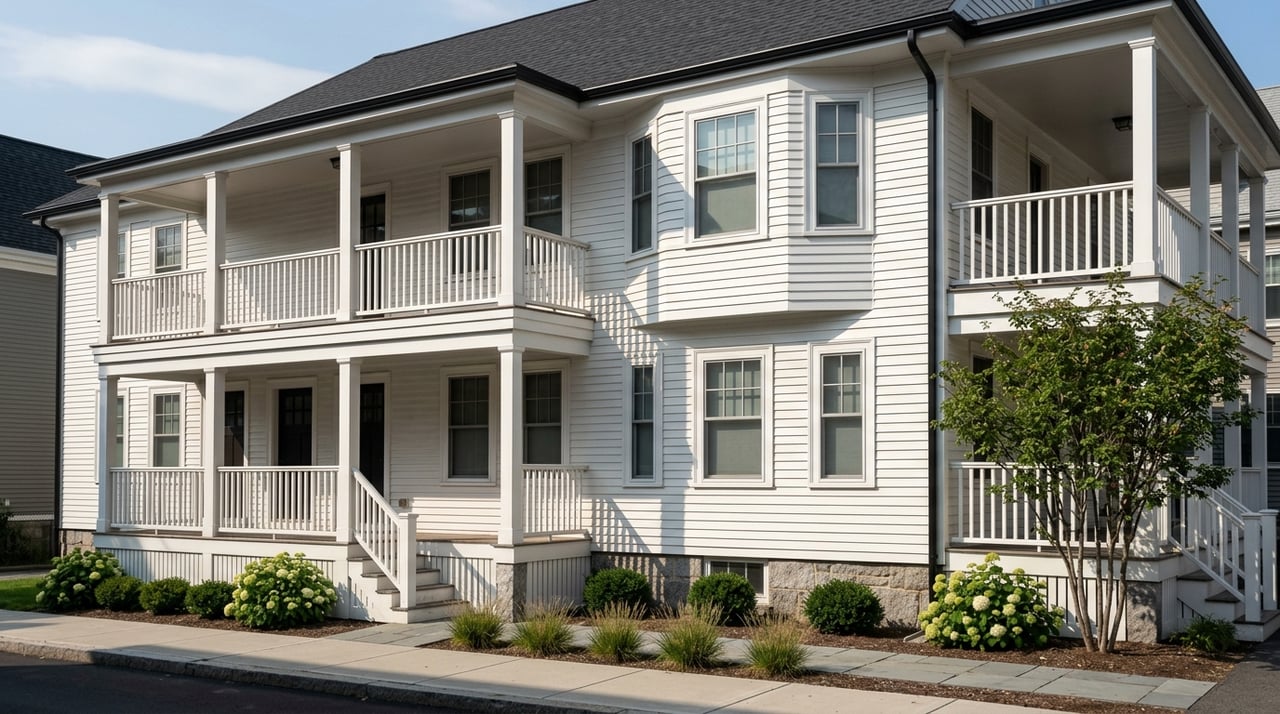
Portland Maine Multi Family Investing: What to Know Today
May 14, 2026
May 14, 2026
If you are thinking about buying a multi-family property in Portland, you are probably asking the right question: does the deal still work in today’s market? Portland continues to draw investor attention because rents remain strong and vacancy is still relatively tight, but this is not a market where you can rely on broad headlines alone. You need a clear view of rent control, zoning, operating rules, and realistic underwriting before you commit. Let’s dive in.
Portland remains one of Maine’s stronger rental markets, even if the exact rent figure depends on the dataset you use. As of May 2026, Zillow showed an average rent of $2,412 in Portland, while HUD and CoStar reported an average apartment rent of $1,965 for the Portland metro in the fourth quarter of 2025. The key takeaway is simple: rents are still healthy, but your underwriting should rely on property-specific rent comps, not one citywide average.
Vacancy also points to a market with steady demand. HUD and CoStar reported Portland metro vacancy at 4.5% in Q4 2025, up slightly from 4.2% a year earlier, with the market still classified as balanced. That is an important distinction because balanced does not mean weak. It means investors should expect support for occupancy and rent, but not assume runaway growth.
A balanced market can be a good thing for long-term investors. It often suggests less volatility and a more durable rent base, especially when you buy with a realistic plan. In Portland, the story is more about disciplined execution than chasing a hot trend.
Recent metro data showed asking rents rising from $1,818 in Q1 2024 to $1,888 in Q3 2024, while vacancy moved from 6.3% to 4.3%. That tells you Portland has seen meaningful support in both rent and occupancy. Still, the safer investment approach is to underwrite modestly and stress-test your assumptions.
This is not a market where pro forma optimism should drive your offer price. Portland’s local rules and modest vacancy cushion mean your numbers need to be grounded in the actual rent roll, actual expenses, and actual unit condition. If the property needs work or the rents are below market, you need to know how and when those gaps can realistically be addressed.
That matters even more because city rules limit how quickly income can be repositioned. In practice, your investment outcome may depend less on broad market appreciation and more on how carefully you evaluate lease terms, turnover timing, deferred maintenance, and compliance requirements before closing.
One of the biggest mistakes buyers make is underwriting to a headline rent number. Portland’s rent data can vary based on whether the source is measuring the city itself, a larger metro area, or a specific class of apartments. A duplex, triplex, or four-unit building in one part of Portland may perform very differently from a larger apartment asset elsewhere in the metro.
That is why unit-specific rent comps matter so much. You want to compare similar unit sizes, layouts, condition, and locations, then layer in the current lease structure and any limits on future increases. In Portland, precision matters more than broad market enthusiasm.
Cap-rate data in Portland also calls for caution. NAR and CoStar metro reports showed multifamily cap rates around 7.5% in Q1 2024 and 7.7% in Q2 and Q3 2024, while a separate investor analytics source estimated a 4.5% cap-rate proxy for Portland-South Portland. That spread is a reminder that there is no single cap rate that defines every Portland deal.
Your return profile should be based on comparable sales, building size, asset class, location, and operational condition. A smaller owner-occupied multi-family can trade differently than a fully stabilized investor-owned asset. If you are evaluating a property seriously, you need deal-specific context, not just market shorthand.
If you are investing in Portland, you need to understand the city’s rent-control framework before you estimate upside. According to the city’s FAQ, the ordinance applies to all rental units in Portland, including short-term rentals, with some exemptions. Those exemptions include owner-occupied buildings with 2, 3, or 4 dwelling units, accessory dwelling units, publicly controlled or subsidized units, municipal housing authorities, and certain institutional housing.
For covered units, the base rent is tied to June 2020 rent, and the allowable increase percentage for 2026 is 2.2%. Rent can increase only once every 12 months, and total increases cannot exceed 10% unless unused increase capacity has been banked. For investors, that framework directly affects how quickly you can grow income.
The city allows a 5% increase on a new tenancy if the prior tenancy ended voluntarily. That can be meaningful, but it still does not turn Portland into a fast-reset market. If you are buying a building with below-market rents, you need to look carefully at lease status, turnover expectations, and whether banked rent capacity exists.
The city also states that capital improvements alone do not justify a higher rent increase unless the Rent Board approves a maintenance of net operating income application. In other words, a renovation budget does not automatically create revenue upside. The numbers have to work within the city’s actual process.
Portland requires 90 days’ written notice before increasing rent on a covered unit. Maine law separately requires at least 45 days’ notice for a rent increase and 75 days if the increase is 10% or more. For owners, this affects planning, timing, and cash flow forecasting.
There are other operating rules to factor in as well. Portland says landlords cannot charge application fees, must provide the city’s rental housing rights document, and must comply with the city’s rental information system. New ownership does not reset rent-control compliance, so due diligence needs to include the seller’s existing compliance history.
Security deposit limits are another detail that can shape operations. Maine law caps a security deposit at two months’ rent, but Portland’s FAQ says landlords may not require more than one month of rent for a security deposit in covered cases. Maine law also limits the initial amount required at lease signing to the first month’s rent, the security deposit, and properly disclosed mandatory recurring fees.
That may not change whether you buy a property, but it does affect your lease-up assumptions and front-end cash collection. In a market like Portland, strong underwriting is often built on details that look small at first glance.
In Portland, compliance is not an afterthought. Rental properties must be registered with the city within 14 days of being rented, and an acquired rental property must be registered within 30 days if it will continue to be rented. If you are buying an existing multi-family, you are buying both the building and the operational record attached to it.
This is one reason due diligence should go beyond unit counts and current rents. You also want clarity on registration status, notices, lease structure, and any outstanding compliance issues. Clean records and organized operations can protect your timeline and reduce surprises after closing.
If part of your investment thesis depends on adding units, converting space, or expanding the building, verify zoning before you underwrite that upside. Portland’s zoning resources direct owners and buyers to the zoning map, GIS tools, and land use ordinance, and that is a strong reminder that parcel-level review matters. A general assumption about what is allowed is not enough.
The city’s land-use code defines a multifamily dwelling as a building or portion of a building containing three or more dwelling units. Some multiplex and multifamily projects may also be subject to site-plan review and land-area or parking requirements. That means a value-add idea that looks simple on paper may require more review than expected.
In many markets, investors look first to big physical changes for upside. In Portland, the more defensible value-add strategy is often operational. Improving unit condition, reducing deferred maintenance, managing expenses carefully, and capturing turnover pricing within the city’s rules can be more realistic than assuming a major rent jump after renovations.
That approach aligns with the city’s framework. Since capital improvements alone do not override the rent cap without Rent Board approval, buyers should be cautious about overpaying for a property based on renovation-driven projections alone.
For some buyers, the best multi-family play in Portland is not a purely investor-owned building. Portland’s rent-control FAQ states that owner-occupied 2, 3, and 4 unit buildings are exempt from the city’s rent-increase limits. That can create a different financial profile for house-hackers and owner-occupants compared with traditional investors.
If you plan to live in one unit and rent the others, that exemption may materially affect flexibility and returns. It does not remove the need for careful analysis, but it can make a duplex, triplex, or four-unit property especially worth a closer look.
If you are considering Portland multi-family real estate today, focus on the factors you can verify. Look closely at in-place rents, lease timing, turnover potential, operating expenses, registration status, and whether the property is covered by rent control or exempt. Then test your assumptions against actual city rules, not ideal-case projections.
Portland can still offer durable multifamily returns, but it rewards buyers who do their homework. The strongest opportunities tend to come from disciplined underwriting, realistic improvement plans, and a clear understanding of how local regulations affect income.
If you want help evaluating a Portland multi-family opportunity, planning an owner-occupied purchase, or comparing the upside and risk across neighborhoods and property types, Dambrie Garon Real Estate Advisors can help you make a more informed next move.


Cumberland Maine
What James Baldwin, a dinner at Dara and a possible VA have me thinking about this week.


Fill out the form below to learn more about buying or selling a house in your area.
Dambrie Garon Real Estate Advisors offers their clients particular expertise in the buying and selling of single and multi-family properties, new construction, and subdivision projects. Our clients benefit from our insights into home renovations, knowing where and how much to invest to bring a property to its highest and best use, whether for renovation and resale or renovation for the families' own use.