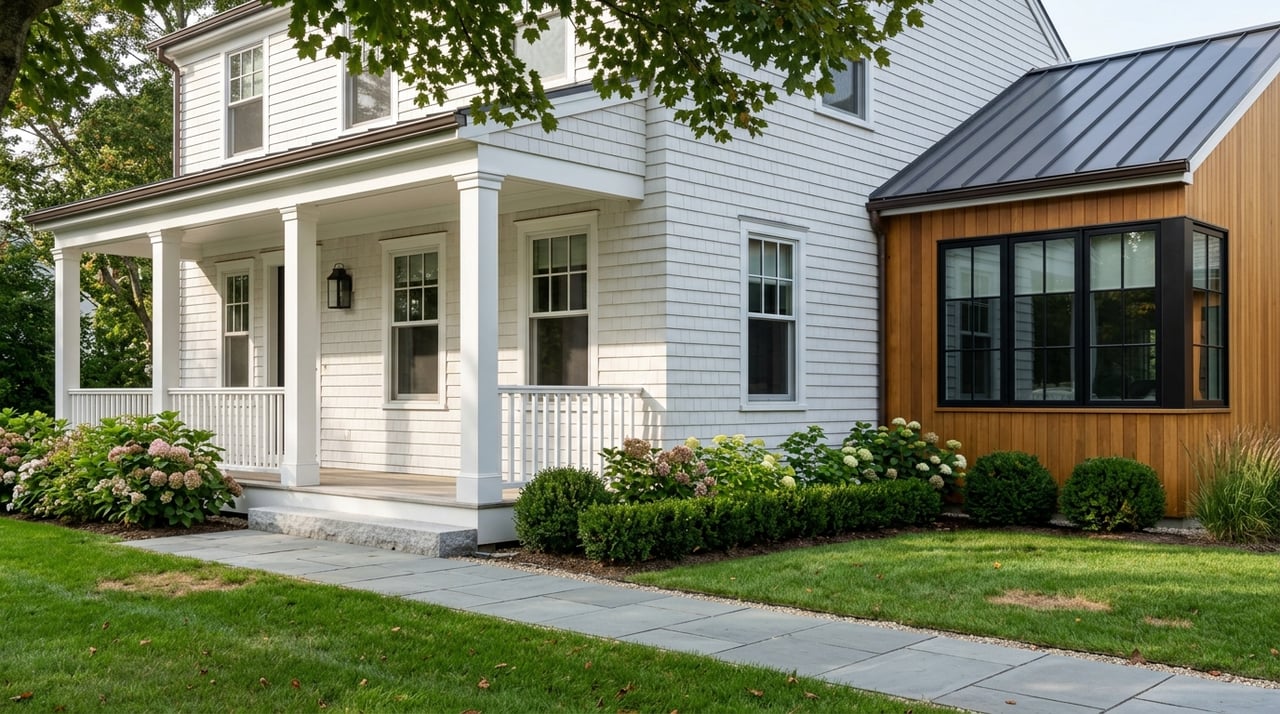
Thinking About Moving to Yarmouth, Maine?
April 23, 2026
April 23, 2026
If you are thinking about a move to Yarmouth, chances are you are weighing lifestyle against budget. This coastal Cumberland County town offers a compact village feel, strong outdoor access, and a small-town setting close to Greater Portland, but it also comes with a higher price tag than many nearby markets. In this guide, you will get a clear look at who Yarmouth tends to fit best, what daily life can look like, and where the tradeoffs matter most. Let’s dive in.
Yarmouth is a small coastal town with about 9,000 residents, according to U.S. Census QuickFacts. With 13.41 square miles of land, it feels more like a compact, close-in suburb than a spread-out rural town.
That scale is part of the appeal. You get a community that feels manageable and connected, while still being close to the larger amenities of the Greater Portland region.
Yarmouth is not a one-size-fits-all town, but it does tend to work especially well for a few types of buyers. The local data points to a mix of households rather than one dominant life stage.
According to the town’s January 2025 housing report, 37.7% of households include someone under 18, 44.9% include someone 60 or older, and 23.3% are single-person households. That helps explain why Yarmouth often appeals to both growing households and downsizers looking for a high-amenity setting.
For many buyers, Yarmouth’s school system is one of the biggest reasons to consider the town. The National Center for Education Statistics reports that Yarmouth Schools is a PK-12 district with four schools and 1,655 students, with 11.3 students per teacher.
That smaller district scale can be appealing if you are looking for a town where the school system is a visible part of community life. In February 2025, Yarmouth Schools announced that Yarmouth High School, Frank H. Harrison Middle School, and Yarmouth Elementary School were named Apple Distinguished Schools for instructional technology use.
One of Yarmouth’s strongest lifestyle features is its village core. The town’s comprehensive plan notes that the Main Street Village streetscape plan is focused on improving safety and attractiveness for all users through ADA-compliant sidewalks, lighting, and street trees.
That matters in day-to-day life. If you are looking for a town with a defined center rather than a purely drive-through suburban layout, Yarmouth offers a more connected feel than many communities of similar size.
The same planning work also supports better access to village commercial areas and Metro BREEZ bus stops. That does not make Yarmouth car-free, but it does support a more convenient and connected village experience.
If you want easy access to outdoor recreation, Yarmouth stands out. The town’s comprehensive plan reports 27.85 miles of urban, rural, and riverside trails maintained in 2022, along with 677 acres of open space.
Public access points are another major plus. The town highlights places such as Royal River Park, Pratt’s Brook Park, Yarmouth Town Landing, and Sandy Point Beach, along with seven public marine-water access points and four fishing access points.
For many buyers, this is where Yarmouth really separates itself. You can enjoy a small-town setting with walkable recreation and water access without feeling far removed from the Portland area.
Yarmouth works best when your lifestyle priorities line up with its commuter pattern. According to the town’s comprehensive plan, about 87% of residents commute outside of town for work, while only about 13% both live and work in town.
The same report notes that working from home rose from 6% in 2010 to 14.9% in 2021. Census QuickFacts lists the mean travel time to work at 26.9 minutes, which gives you a useful baseline if you are comparing Yarmouth to other nearby towns.
For many buyers, the main question is not whether Yarmouth is appealing. It is whether Yarmouth fits the budget. The town’s January 2025 housing report makes clear that affordability remains a challenge.
That report cites 2024 Redfin typical home values of $719,131 and compares that with a MaineHousing affordability figure of $278,644 for a median-income Yarmouth household. It also states that all homes sold in 2023 were unaffordable to households earning the town’s median income.
Census QuickFacts adds more context, showing a 2020-2024 median owner-occupied home value of $639,700, median monthly owner costs with a mortgage of $2,855, and median gross rent of $1,693. In short, Yarmouth is not an entry-level market.
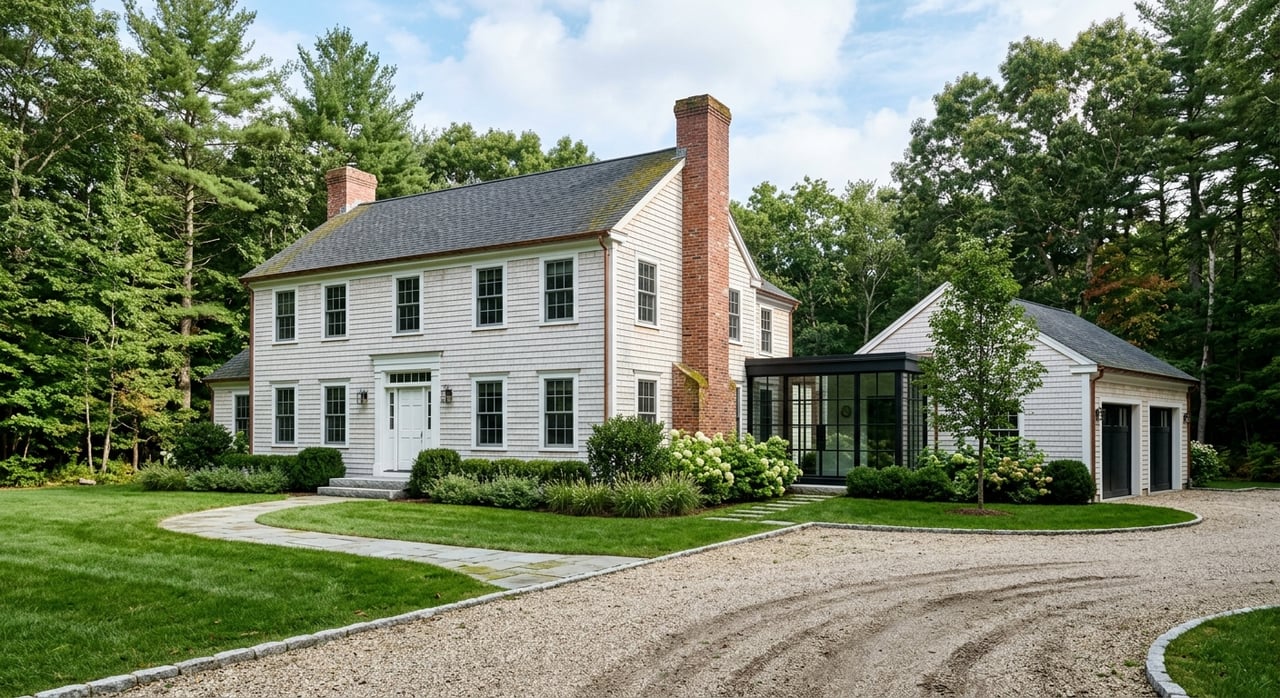
Yarmouth’s housing stock still leans heavily toward detached homes. The town housing report shows detached units as the largest category, with roughly 72% of the stock shown in that table falling into that segment.
That shape of inventory affects your search. If you are hoping for a broad range of lower-priced attached or multifamily options, supply is more limited than in some other markets.
At the same time, the town’s planning discussions show interest in more duplexes, ADUs, and smaller multifamily buildings in the future. That may gradually expand options, but today, the market remains strongly oriented toward owner-occupied detached housing.
Yarmouth can be an excellent fit if you are looking for a high-amenity coastal-suburban lifestyle and you are comfortable with the pricing. The town offers a lot in one place: a village core, strong outdoor access, public water access, a small school district, and a location that keeps you connected to Greater Portland.
The flip side is just as important. Limited supply, higher home values, and a commuter pattern centered on living in town but working elsewhere mean Yarmouth tends to work best for buyers who are prioritizing lifestyle, stability, and setting over bargain pricing.
A smart move here starts with clarity. If your goals include village character, outdoor access, and a residential coastal setting, Yarmouth may be worth a serious look. If your top priority is stretching your budget or minimizing commute time, it may make sense to compare it with other nearby towns before you decide.
If you are weighing Yarmouth against other Greater Portland communities, Dambrie Garon Real Estate Advisors can help you compare the tradeoffs, understand the local market, and find the right fit for your next chapter.

Fill out the form below to learn more about buying or selling a house in your area.
Dambrie Garon Real Estate Advisors offers their clients particular expertise in the buying and selling of single and multi-family properties, new construction, and subdivision projects. Our clients benefit from our insights into home renovations, knowing where and how much to invest to bring a property to its highest and best use, whether for renovation and resale or renovation for the families' own use.