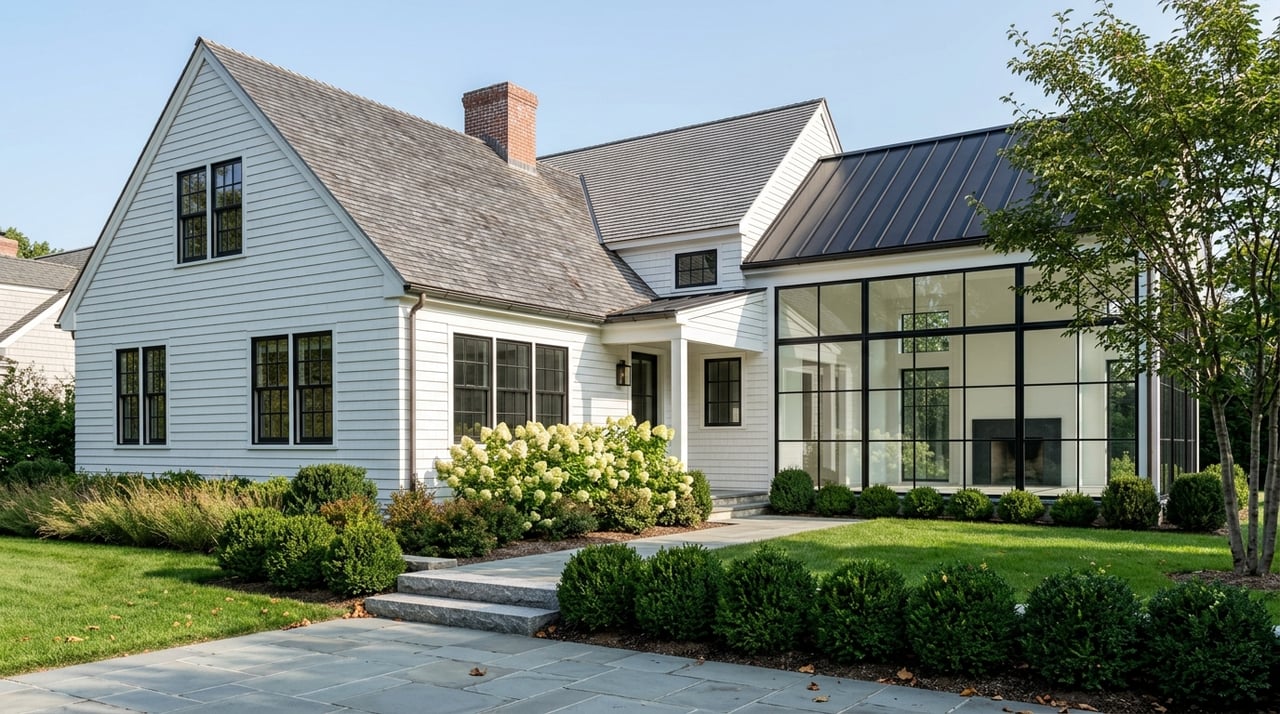
Yarmouth Village Or Coast: How Lifestyle And Homes Differ
June 25, 2026
June 25, 2026
Are you drawn to a walkable town center, or does life near the water feel more like home? In Yarmouth, that choice can shape not just your daily routine, but also the kind of home, lot, and setting you find. If you are weighing Yarmouth Village against the coast or islands, this guide will help you compare lifestyle, housing patterns, and practical tradeoffs so you can focus your search with more confidence. Let’s dive in.
Yarmouth’s planning framework points to a clear town pattern: a compact, walkable village center and a more rural, coastal hinterland. The town covers 22.94 square miles in total, with 13.41 square miles of land and 9.59 square miles of water, so water and shoreline shape a meaningful part of daily life here.
That pattern matters because Yarmouth is not one-note. Residential development makes up 71% of existing land use, and much of the town’s housing was built between 1960 and 1990. As a buyer, you are often comparing older village-area homes, postwar suburban-era properties, and waterfront or island homes with very different site conditions.
If you want to be close to errands, dining, and civic spaces, the village often stands out first. The town describes Main Street as the heart of historic Yarmouth, with small businesses, restaurants, and a strong role as a community gathering area.
That walkable feel is reinforced by local planning. A downtown parking study supports a park-once approach with shared parking and better pedestrian connections, which reflects a place designed to be experienced on foot rather than only by car.
Village living usually means a more neighborhood-centered atmosphere. Homes tend to sit on more compact parcels, and neighbors may be closer than what you would find on many coastal roads or waterfront lots.
At the same time, the village still aims to feel residential. In Village II, local zoning emphasizes the retention of lawns, trees, and open space, which helps explain why parts of the village can feel settled and green even near businesses and town services.
Zoning helps preserve the village’s scale. Village II is intended to remain primarily residential, with limited low-intensity businesses, offices, and inns.
Village III works as a transition zone between the Village and Route One. It is described as a residential and mixed-use connector, especially for bicycle and pedestrian movement across the Royal River area. Village III requires a minimum lot size of 10,000 square feet and a minimum lot width of 50 feet, while Village II generally limits new buildings or additions to a 4,000 square foot footprint.
If your ideal routine includes boating, paddling, fishing, or spending time near the shore, the coastal side of Yarmouth may feel like a stronger fit. The town treats access to the navigable tidal waters of Casco Bay as a major economic, social, recreational, cultural, and environmental benefit.
Yarmouth also invests in public access at places such as Town Harbor, Madeleine Point, Littlejohn Island, Wharf Road, and Old Town Landing Road off Princes Point. Public water access points listed by the town include Town Landing, Old Town Landing, Royal River Park, Sandy Point Beach, Littlejohn Island Dock, and the Royal River Trail.
It helps to think of coastal Yarmouth as a collection of different settings, not one single lifestyle. Cousins Island and Littlejohn Island are year-round island communities connected by bridges, while other islands are seasonal or conserved.
That means one property may feel like part of an established residential area, while another may feel more tucked away and shaped by protected waterfront surroundings. Your day-to-day experience can vary quite a bit depending on the exact road, shoreline conditions, and access points nearby.
Many waterfront and near-water properties feel more spread out than village lots, but they can also come with more site-specific rules. In waterfront districts and shoreland areas, lot size, frontage, and building footprint standards can be much more demanding.
For example, in the Water Oriented Commercial I district, a parcel generally requires a 2-acre lot and 200 feet of width, and most new building footprints are generally limited to 4,000 square feet. Where shoreland standards apply, new residential lots adjacent to tidal waters generally need 150 feet of shore frontage and 30,000 square feet of land area, while lots adjacent to non-tidal waters generally need 200 feet of frontage and 40,000 square feet of land area.
In and around the village, the appeal often starts with proximity. You may be looking at homes that give you easier access to Main Street, the library and town office area, restaurants, and public spaces.
Because much of Yarmouth’s housing stock was built across several decades, the village area can include a range of home styles and ages. The common thread is less about one exact architecture type and more about location, walkability, and connection to town amenities.
On the coast, the setting itself often carries more weight. Buyers may be prioritizing water views, water access, privacy, or a more land-intensive feel over quick walks to downtown.
This does not mean every coastal property is isolated. Some are in year-round island communities with a lived-in neighborhood feel, while others are defined more by shoreline conditions, dock access, or proximity to marinas and launch points.
You do not always have to choose between the densest village setting and a fully coastal lifestyle. Some transition areas offer a useful middle ground, especially if you want proximity to town amenities without being in the center of the village.
Village III is a good example because it is explicitly described as a residential transition zone between the Village and the Route One commercial corridor. Some shoreland-adjacent roads can also offer a blend of access and breathing room, depending on the parcel and district.
Your lifestyle choice in Yarmouth is not only about village versus water. Outdoor access is part of the town’s identity in both settings.
Yarmouth Community Services monitored 27.85 miles of paths and trails in 2022, and the town has continued work on Royal River Park, the Beth Condon Pathway Extension, and the West Side Trail Last Mile. If you value walking, biking, and getting outside, those features may shape your search as much as the house itself.
When you tour homes in Yarmouth, it helps to compare more than square footage and finishes. The better question is often how you want your week to feel.
Do you picture walking to Main Street and nearby public spaces? Or do you want your free time centered around shoreline access, boating, and a quieter, more spread-out setting? In Yarmouth, those choices often point you toward very different parts of town.
Parcel-by-parcel review matters in Yarmouth. Two homes in the same town can come with very different expectations for lot size, frontage, building footprint, and shoreline standards depending on whether they sit in the village core, a residential district, or a waterfront zone.
That is especially important if you are thinking about future changes, additions, or simply want to understand how a property’s setting affects long-term use. A home that looks similar on paper can function very differently once zoning and site conditions are part of the conversation.
If you want everyday convenience, walkability, and a more compact neighborhood feel, Yarmouth Village may be the better fit. If you are drawn to water access, privacy, and a setting with more separation between homes, the coast may feel more aligned with your goals.
Neither choice is universally better. The right answer depends on how you want to live, what type of property feels comfortable, and how much value you place on access to downtown versus access to the water.
If you are exploring Yarmouth and want help weighing village, coastal, or island options, Dambrie Garon Real Estate Advisors can help you compare the details and find the setting that fits your next move.
Fill out the form below to learn more about buying or selling a house in your area.
Dambrie Garon Real Estate Advisors offers their clients particular expertise in the buying and selling of single and multi-family properties, new construction, and subdivision projects. Our clients benefit from our insights into home renovations, knowing where and how much to invest to bring a property to its highest and best use, whether for renovation and resale or renovation for the families' own use.